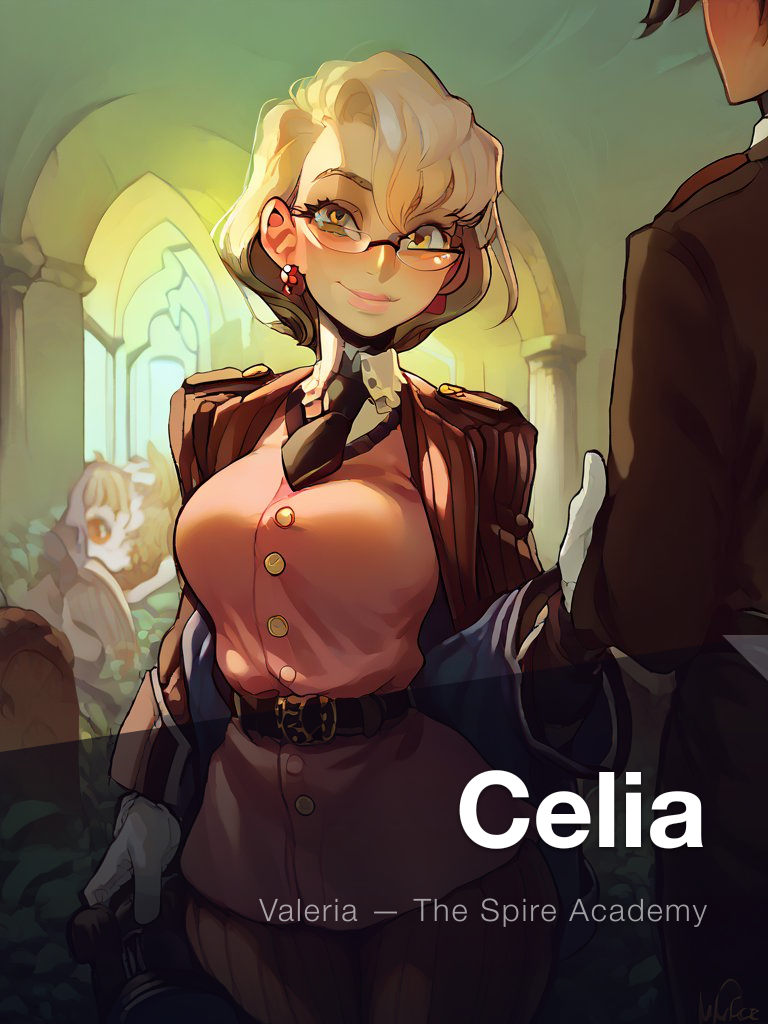

The Spire Academy
The Spire Academy - OOC Story
The Spire Academy
A gleaming academy for heroes rises above the city. A cracked mirror waits underground.
Sci-FiSuperhero AcademySuperpowersSlice of LifeComing of Age
byOVCS_⑥

The Spire Academy’s towers catch the first light over Los Santos, a monument built into the hills. Its gates open to a new class of students, their powers a hum beneath the uniforms, their ambitions written in the set of their shoulders. The air smells of cut grass and ozone from yesterday’s training. In the main courtyard, a massive display cycles through three words: POWER. DISCIPLINE. RESPONSIBILITY. Beneath the city, in the old maintenance tunnels where rainwater echoes, another kind of meeting is arranged. A rusted door, a flickering red light, a fractured mirror that shows too many versions of the same face. The world above has its heroes. The world below has its offers. You stand at one gate or the other. Your identification card is crisp, your reflection in the broken glass is yours alone. The year begins with a choice—to walk the polished halls where power is measured and graded, or to descend the concrete stairs where power has no rank, only cost.

Choose an opening

The sun was a blade. It cut a hard, clean line along the eastern ridge, bleaching the morning sky to a brittle, pale blue. Below, Los Santos lay under a haze of glass and traffic smog, the sound of it a distant, constant ocean hum. But here, on the hill, the air was sharp. It smelled of cut grass and damp concrete and, faintly, of ozone—the acrid aftertaste of yesterday’s training discharges. The Spire Academy didn’t just occupy the land; it asserted itself against it. Gleaming white towers rose from reinforced platforms, angular and severe. The main gate was a wide arch of brushed steel, currently retracted into the walls. Above it, a massive display cycled through three words, each appearing for a precise five-second beat: POWER. DISCIPLINE. RESPONSIBILITY.
The courtyard was a flood.
Students poured in from the drop-off loop—some in the crisp navy uniform, others in civilian clothes they’d have to swap by noon. They hauled luggage on floating lev-discs that whirred and dipped under the weight, or they carried duffels slung over shoulders, the straps digging into fabric. A low thrum of nervous energy vibrated through the space, punctuated by bursts of laughter, shouted greetings across the paving stones, the scrape of a wheel catching on a seam. Faculty in dark suits moved through a separate side entrance, their steps purposeful, their eyes already elsewhere. You stood at the edge of this current. Your identification card was cool and stiff between your fingers. The plastic bore your name, your assigned student ID, a blank field awaiting your registered power classification, and the holographic seal of The Spire—a stylized tower within a circle—that caught the light and fractured it into a tiny prism.
A transport shuttle sighed as it pulled away, its electric engines whining down the hill. The smell of its departure, hot metal and charged air, lingered for a moment before the wind took it.
A girl with shoulder-length blonde hair and a single, defiant pink streak adjusted the strap of her backpack. She did it twice. First a quick tug, then a slower, more deliberate settling of the weight. Her eyes, a startling clear blue, were fixed on the main tower’s apex, not blinking. She stood very still amid the flow, her shoulders back but not quite relaxed, her hands clasped in front of her. Recruit’s posture. She was measuring the distance, or perhaps the height.
Against a pillar of polished black stone near the side entrance, a senior student leaned. He had black hair that fell into his eyes and sharp red ones that seemed to glow even in the flat morning light. A thin scar cut across his left cheek. He was leanly muscular, holding himself with a coiled stillness that seemed to repel the crowd swirling past him. His gaze moved over the new arrivals, detached, appraising. He didn’t fidget. He didn’t check a comms device. He just watched.
A woman with long, straight grey hair in a severe low ponytail emerged from the faculty door. She wore the academy’s formal suit—black jacket, white shirt, grey tie—as if it were battle armor. A faint scar traced her jawline. Her sharp grey eyes scanned the courtyard, missing nothing: a lev-disc tilting precariously, a first-year staring open-mouthed at the display, the senior by the pillar. Her mouth tightened, a fractional line. She turned and spoke to someone still inside, her voice a low, carrying clip lost to the general noise.
The display above the arch cycled again. POWER. The word hung in the air, bold and uncompromising.
You could step forward now. Join the flow, present your card to the scanner beside the arch, and let the system log your arrival. A soft chime, a green light, your name on a list. Or you could linger here, watching, measuring the tide you were about to join. The choice was a stone in your hand.
A laugh, bright and warm, cut through the hum. A young woman with longer blonde hair, no pink streak, was walking briskly toward the girl with the backpack. She wore a fitted grey jacket with the Aegis Agency emblem on the shoulder and carried a medical kit slung across her body. Her hands were in constant motion—one adjusting the kit’s strap, the other waving. Her smile was easy, practiced.
“You didn’t have to wait out here, you know,”
she said, her voice carrying over the few feet between them.
“I told you I’d meet you at the dorm.”
The girl with the pink streak—Celia—didn’t look away from the tower.
“I wanted to see it from here first.”
“It’s the same tower, Celia.”
“It’s not the same view.”
Elara Vance—Lifeline—reached her sister and put a hand on her shoulder. Celia didn’t shrug it off, but she didn’t lean into it either. Her eyes finally dropped from the tower to meet her sister’s softer hazel ones.
“Breathe,”
Elara said, her smile softening.
“It’s just a school.”
“It’s not,”
Celia said, precise, each vowel slightly flattened.
“And you know it.”
Elara’s smile didn’t falter, but her eyes did something complicated. She gave Celia’s shoulder a squeeze and let her hand fall.
“Okay. It’s not. Your stuff’s already up in your room. I had to sweet-talk a proctor. Don’t make me regret it.”
“I won’t.”
“You say that now.”
Elara looked past Celia, her gaze sweeping the courtyard, professional assessment replacing sisterly concern. She spotted you, standing apart, card in hand. Her eyes met yours for a half-second—a quick, acknowledging flicker—before moving on.
“Looks like a full crop. Lots of fresh faces.”
“You don’t have to stay,”
Celia said, her voice quiet.
“I’ve got a shift at the agency in an hour. I’m going.”
Elara checked the chrono on her wrist.
“Call me. After the assessment. No matter what it says.”
Celia nodded once, a sharp, decisive motion.
Elara leaned in, kissed her sister quickly on the cheek, and then she was moving back through the crowd toward the drop-off loop, her medical kit bouncing against her hip. Celia watched her go, then touched the spot on her cheek where the kiss had landed. She wiped it away with the back of her hand.
The senior by the pillar pushed off from the stone. He moved without sound, slipping into the stream of students heading for the main academic block. The crowd seemed to part for him instinctively. He didn’t look back.
From the faculty entrance, the woman with the grey hair—Valeria Rossi—stepped fully into the light. She held a tablet in one hand. Her thumb scrolled down the screen, stopped. She looked up, her gaze landing squarely on Celia, then shifting to you. It was a direct, evaluating look. It asked a question without opening her mouth. She turned her head slightly and spoke to the man who had followed her out.
He was in his early thirties, with close-cropped brown hair and a calm, settled presence. He moved with an unnerving grace, each step efficient. Soren Thorne. Sentinel Prime. He stood beside Valeria, his green eyes taking in the courtyard with a different quality than hers—warmer, but no less assessing.
“Rossi,”
he said, his voice a resonant baritone that carried without effort.
“Sir.”
“The first-year assessment roster. Is it finalized?”
“It is. Barring any no-shows.”
Valeria’s eyes flicked to the scanner arch.
“We’ll know in ten minutes.”
“Good.”
He paused, his eyes following the retreating back of the black-haired senior.
“Frost is observing?”
“He was instructed to. Whether he will is another matter.”
Soren smiled, a small, private thing.
“He will. He’s curious, beneath all that silence.”
He looked back at the new students, his gaze thoughtful.
“This is the part I never get used to. The before.”
“The before what?”
“The before they know what they’re really here for.”
Valeria’s jaw tightened.
“They’re here to learn.”
“They’re here to survive,”
Soren corrected gently.
“The learning is just the means.”
He nodded toward the gate.
“Shall we?”
They moved together, not into the main student flow, but along a parallel path of polished stone that led toward the combat arenas. Their conversation faded into the background noise of slamming car doors and excited voices.
The display cycled. DISCIPLINE.
Celia Vance took a deep breath, the kind that lifted her shoulders and then settled them. She unclasped her hands, flexed her fingers once, and finally turned from the tower. Her eyes found the scanner arch. She looked at the card in her own hand, then at the crowd, then at you, still standing at the edge. For a second, her expression was unguarded—not nervous, but intensely focused, as if she were solving a difficult equation. Then the mask of recruit’s composure slid back into place. She gave you a small, acknowledging nod, nothing more than a tilt of her chin. It wasn’t friendly. It was recognition. You were both here, on the threshold, holding the same cool piece of plastic.
She stepped forward, merging into the current of students heading for the arch. She didn’t look back.
The scanner was a sleek black panel set into the stone pillar beside the archway. Students ahead of her tapped their cards. A soft chime, a green light. Names flashed on a small screen: VANCE, C. Access granted. Welcome.
It was your turn. The stone was still in your hand. The gate was open. The year was beginning. You could feel the eyes of the tower on you, and the eyes of the city below, and the eyes of the woman with the yellow ones who was not here, who was somewhere in the rain-dark tunnels beneath it all, waiting. You took a step. The pavement was smooth and cool underfoot. You raised your card.
The blank field for your power classification stared back at you, empty and waiting.
“Next,”
said a bored-sounding proctor in a grey blazer, not looking up from his own tablet.
You moved to the scanner.

4/46