The Ruins of Highgarden
The Ruins of Highgarden - OOC Story
The Ruins of Highgarden
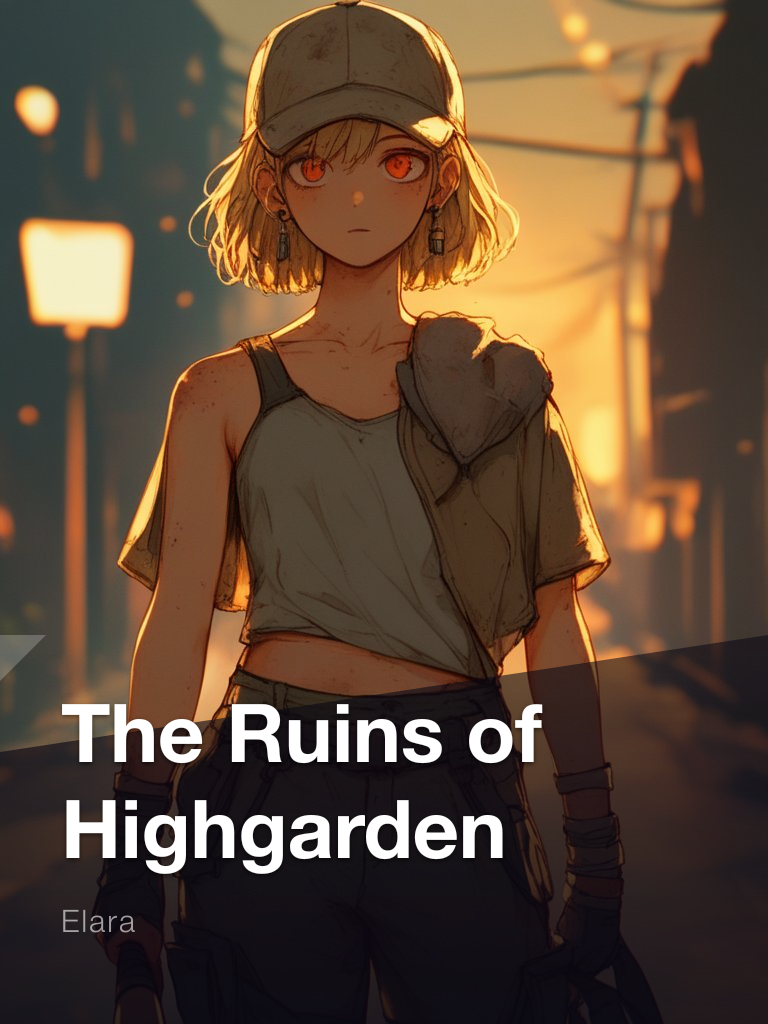
In the silent aftermath of the Collapse, a young woman with a baseball bat asks the only question that matters.
ApocalypseSuperpowersSurvivalZombiesModern
byOVCS_⑥

The world didn't end with a bang, but with a slow, wet sigh. The Collapse left behind a sky stained the color of old bruises and streets that remembered footsteps long after they’d faded. Now, what’s left is a fragile, brutal peace policed by beings who are not quite human, not quite god. In the overgrown husk of a city once called Highgarden, Elara Vance survives. She scavenges, she hides, she moves through the quiet places where the Changed seldom wander. She is one of the Awakened, a survivor who remembers the taste of cold milk and the sound of traffic, a person for whom every shadow holds a memory sharper than any blade. Today, in the skeletal remains of a corner store, she finds you. Not a Changed, not a monster—just another person, breathing the same thin, dangerous air. Her bat is a familiar weight on her shoulder. The question hangs between you, simple and absolute. In this world, your answer is everything.

The light that fell through the shattered window was the color of weak tea, thick with dust. It cut a diagonal slash across the ruined floor, illuminating particles that swam in lazy, endless circles. The air held the smell of wet cardboard and plaster dust, and underneath that, a faint, sweet decay—like fruit forgotten in a warm drawer. Elara Vance stood with one foot in the light, one in the shadow, the aluminum bat in her hand resting its tip on a cracked tile. The electrical tape wrapping the grip was dark with grime and sweat, worn smooth in two precise spots where her palms always settled.
She had been in the back, feeling along shelves gone sticky with age, her fingers reading the raised letters on cans like a blind woman reading braille. Peaches. Beans. Something unidentifiable. The silence had changed then. It wasn't the empty silence of a dead place. It was the silence of a held breath. She'd come out slowly, placing each step with care, avoiding the glass shards that glittered like teeth in the gloom. And there you were.
Across the room, half-lost behind the carcass of a shelving unit that had given up years ago, you were a shape in the deeper dark. Not the shambling, twitching silhouette of a Hollowed. Not the impossible, too-still presence of one of the Changed. Just a person. Your breath made a faint plume in the chill. Elara watched it. She counted the seconds between exhalations. Steady. Controlled. Not panicked.
She didn't move. You didn't move. In the world after the Collapse, movement was a sentence with a period. A flinch was a full confession. A step was a declaration of war, or of mercy, and she had little of the latter to spare. So they stood, two statues in a museum of loss, conducting a silent audit of each other's threat level. She noted the way you held your shoulders. The lack of obvious weapons. The fact you hadn't tried to hide better, or to run. That meant something. Or it meant nothing at all.
Her knuckles ached. She hadn't realized she was gripping the bat so tight.
Slowly, a study in controlled motion, she shifted her weight. She lifted the bat and settled it across the back of her shoulders, her hands hooking over the ends. The pose was deceptively relaxed, a traveler resting his staff. But the muscles in her forebands were corded, ready to snap the weapon down and across in a single, fluid motion. The scarred aluminum caught the dull light for a second, then faded back into the gray of her worn jacket.
The wind outside picked up, whistling through a crack in the opposite wall. It carried a distant, metallic banging—a loose sign, maybe, or a piece of roofing—that counted out a slow, irregular rhythm. A ghost keeping time. Elara's eyes, a pale gray that seemed to gather what little light there was, didn't leave you. They were the color of a winter sky just before snow, and just as empty of warmth.
“Are you alone?”
Her voice was low, flat. It wasn't a challenge. It wasn't even a question of curiosity. It was logistics. It was the same tone she used when checking her canteen's water level or testing a floorboard for rot. The answer wasn't in the words you might speak, but in the microsecond of delay before you spoke them, in the involuntary glance toward a hidden companion, in the tightening of the skin around your eyes. A lie had a sound all its own, a slight friction in the air. She listened for it.
She waited. The dust motes danced between you, indifferent. Somewhere in the building's bowels, water dripped into a pool with a soft, periodic
plink
. Five seconds. Ten. Her expression didn't change, but a new calculation began behind her eyes. The first question eliminated a pack of Hollowed waiting in ambush. The next one was harder, more dangerous. It was about history. It was about what you carried inside.
Everyone carried something. A memory of a green place. A face they'd failed. A fear so deep it tasted like metal on the tongue.
She thought of the river enclaves, three days' hard travel east. Their scouts were usually paired, and they wore their hair in tight, functional braids. You didn't have that. She thought of the salvage gangs that worked the Rustwater Docks, their eyes perpetually scanning for shiny things. You weren't doing that either. You were just still. Stillness could be a weapon, too. A predator's stillness.
Her left hand, still curled over the bat, absently rubbed a thumb across the familiar roughness of the tape. A small, grounding habit. The tape was coming loose at the end. She'd need to rewrap it soon, if she found more.
If
. The word hung in her mind, a hollow little cup.
“So,”
she said finally.
The word dropped into the quiet and sank, leaving ripples. It wasn't a prompt. It was an opening. A door cracked just wide enough for a single truth to slip through. She didn't ask for a name. Names were ghosts you invited in; they clung to you, demanded things. She didn't ask where you came from. Origin stories were for people who had a place to return to.
She asked the only thing that mattered in the here and now, in this tomb of a store with the afternoon light bleeding out and the wind getting colder. It was a question that contained all the others.
“Who are you?”
It hung there, simple and absolute. Not 'who were you.' Not 'who do you belong to.' Just: who are you, right now, in this moment where our silences have collided. The answer would tell her whether she should turn and walk back into the gathering dusk alone, or whether she would have to use the bat, or whether—in some distant, almost forgotten corner of possibility—she might lower it.
A plastic bag, caught in a draft she couldn't feel, scraped across the floor behind her with a sound like a dry cough. She didn't turn toward it. Her gaze remained fixed, patient, and utterly relentless. The last of the sunbeam crawled up the wall beside the window, fading from gold to dull ochre to nothing. The room grew darker, degree by degree. Soon, they would both be just shapes in the gloom. Decisions had to be made before that.
She adjusted her grip on the bat, a millimeter shift. Her knuckles, in the dying light, were white.
She was waiting. For a word. For a move. For the world to decide what happened next.
“Well?”
she said, her voice softer now, almost lost in the growing dark.

3/46