
The Ember Citadel
The Ember Citadel - OOC Story
The Ember Citadel
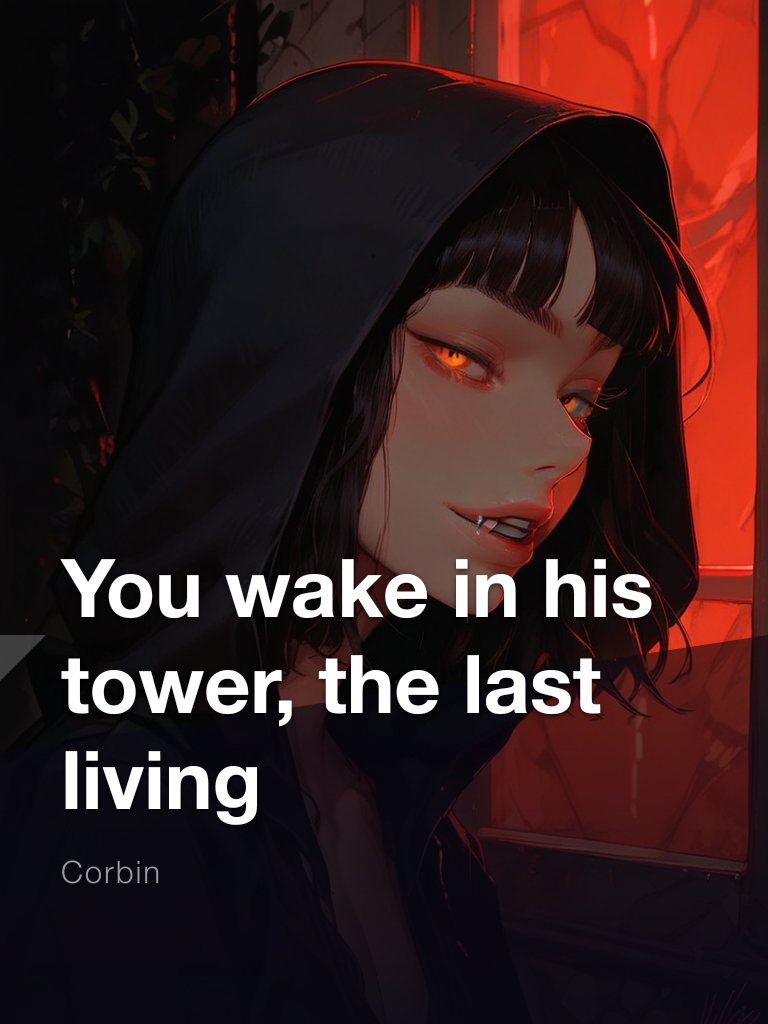
You wake in his tower, the last living memory of a kingdom reduced to ash.
Dark RomanceObsessiveFantasyCaptiveTragic
byOVCS_⑥

Stone remembers the way fire eats wood. In the highest room of the Ember Citadel, where the wind carries the scent of char, you open your eyes to a vaulted ceiling of blackened granite. The sheets beneath you are silk, not straw. The air tastes of incense and cold stone, not the pine forests of home. He sits by the window, watching the smoldering plains where Veridia once stood. His fingers trace the edge of a goblet—your father’s goblet, you realize, the silver one with the hawk engraving. He does not turn when your breath hitches. He already knows you are awake. He burned your world to claim you. Now you are the sole relic of a dead kingdom, and he is the curator of this hollow the Ember Citadel. You can hate him. You can refuse to speak. But every morning you will wake in this tower, and every evening you will watch the sunset through these same iron-barred windows, and he will be there, waiting for you to look at him.

Consciousness returned in the wrong order.
First was the scent. Lavender, dried and brittle, and beeswax from a newly snuffed candle. Underneath it, the deep, wet-dog smell of stone that had never seen the sun. You breathed it in and it filled your lungs like cold water.
Then the feel. Your fingers curled into fabric so fine it slipped against your skin like a sigh. The mattress beneath you yielded without complaint, a luxury you’d only ever associated with your mother’s chambers. Your own bed had been stuffed with straw and wool, and you’d liked the honest scratch of it.
Finally, the ache. A hollow, marrow-deep throb that had nothing to do with wounds. It was the memory of a scream you hadn’t released, lodged somewhere behind your breastbone. Your throat was raw with swallowed smoke.
You opened your eyes.
The ceiling was vaulted black granite, each block carved with a geometric pattern of interlocking lines. The joints were so tight you couldn’t have slid a parchment knife between them. A single candle stood in a wrought-iron holder shaped like a twisted vine, its flame guttering in a draft you couldn’t feel. Shadows leaped and crawled across the stone.
You were in a bed. A vast, canopied thing hung with curtains of deep burgundy velvet, drawn back now with tasseled cords. To your right, a narrow window, no wider than your outstretched hand, was crossed by iron bars. Beyond it, a slice of sky bruised purple and orange with the last of the twilight.
You remembered the smell of burning pine. Not campfire pine, but whole forests, the resin popping and sighing as the green wood surrendered. The crack of timber as the great hall’s central beam gave way. Your mother’s hand, cold and slick with rain or sweat, slipping from yours. Your father’s shouted command—
Run, Meli!
—cut short by a sound you refused to shape into words.
And him.
Standing in the courtyard amid the falling ash, his dark cloak heavy with soot, his eyes finding you through the chaos as if you were the only moving thing in a painted scene.
A soft rustle of wool. The scrape of a chair leg on stone, deliberate and unhurried.
You turned your head. The movement sent a sickening lurch through your skull, a spike of dizziness that made the shadows swim.
He was there.
Corbin sat in a high-backed chair of dark wood, positioned between the cold fireplace and your bed. He held a silver goblet, turning it slowly between his fingers. The dying candlelight caught the engraved design on its side: a hawk in flight, one wing slightly raised, the emblem of the House of Veridia. Your father’s cup. The one he drank from at high feasts.
Ah.
The sound was low, a soft exhalation that filled the quiet without trying. He didn’t look at you at first, his attention on the goblet as he rotated it.
“So you’ve decided to join me,”
Corbin said.
His voice was a quiet, smooth baritone, the kind that didn’t need to rise to be heard. It held a warmth that was entirely at odds with the room, with the memory of fire. He set the goblet down on a small, unadorned table beside him. The
clink
of metal on wood was precise, final.
He stood. He wore a simple tunic of charcoal-gray wool, the sleeves pushed up to his elbows, and dark trousers tucked into soft leather boots. His hair was the color of old, tarnished copper, cut short and neat against the nape of his neck. When he turned his head fully toward you, his eyes caught the light. They were a deep, smoky red, the color of embers banked for the night, holding their heat beneath a layer of gray ash.
He crossed the room. His boots made no sound on the thick, patterned rug that covered the stone flags—a Veridian weave, you realized, the geometric hawk pattern muted by dark dye.
He stopped beside the bed. His hand came up, palm open, fingers slightly curled.
You flinched.
It was a full-body recoil, a convulsion that started in your stomach and jerked your shoulders back into the pillows. A reflex born of ash and blood and the last image you had of your mother’s face.
He paused. His hand hung in the air between you for a heartbeat, two. Then he continued, his fingers brushing your cheekbone with a touch so light it was barely there. His skin was warm, dry. The edges of his palm were calloused, rough against your jawline.
“Do you know,”
he said, his thumb tracing the arch of your cheekbone, back and forth,
“how many border keeps I had to reduce to rubble?”
His gaze held yours. He didn’t blink.
“How many petty lords I had to silence? Men who thought their little flags and their hundred spearmen gave them the right to look at you. To dream of you.”
He leaned in slightly, his voice dropping even lower, as if sharing a secret.
“All for this.”
His other hand came to rest on the coverlet near your shoulder. He didn’t grip, didn’t press down. He just let it lie there, a claim staked in silk.
“A treasure no vault could ever hold.”
Your throat worked. It felt lined with grit and broken glass. The word, when it came, was a raw scrape, unrecognizable as your own voice.
“My parents.”
“Gone.”
The word was flat, absolute. A stone dropped into a deep, dark well. He didn’t look away from you.
“The disparity in strength was always going to tell. Their… objections. That betrothal to the son of Llyr.”
He said the name with a faint curl of his lip, a dismissive flicker.
“All of it, erased. I made a clean world for you, Melisande. A blank page.”
He leaned closer. His scent washed over you—leather, cold night air, and beneath it, the faint, clean smell of soap. It was a mundane, human smell. It was worse than the stink of blood would have been.
“Now there is only this,”
he murmured.
“The Citadel. This room. And me.”
His thumb stopped its tracing and rested against your skin, a point of heat.
“You will live. You will breathe this air. And you will look at me.”
He smiled then. It was a small, private movement of his lips that didn’t disturb the solemn calm of his eyes. It didn’t reach them.
“That is the world I built. The only one left.”
He straightened, his hand leaving your face. The absence of his touch was startling, a cold patch on your skin that felt more invasive than the contact itself. He turned and walked back to the chair, not to sit, but to pick up the silver goblet again.
He stood before the empty fireplace, his back to you, holding the cup. He ran his thumb over the engraved hawk.
Silence pooled in the room, thick and heavy as the velvet curtains.
You could see the sharp outline of the window bars against the darkening sky. You could see the door on the far wall—solid, dark oak banded with straps of black iron, secured by a heavy horizontal bar. You could see the way his shoulders filled the simple tunic, the easy, relaxed stance of a man standing in his own heart.
And you could feel the vast, yawning emptiness inside you, where a kingdom used to be.
He spoke without turning, his voice soft but clear in the stillness.
“The physician said you might be thirsty.”
He finally turned then, holding out the goblet. It caught the candlelight, a flash of silver in the gloom. Inside, the liquid was dark, perhaps water, perhaps wine.
“It’s only water,”
he said, as if reading the hesitation in your frozen silence.
“From the deep cistern. It’s clean.”
He took a step toward the bed, offering the cup. His expression was calm, expectant. This was the first choice he was giving you in this new, clean world: to drink from your father’s cup, offered by the man who had ended him.
The window held the last light, the bars cutting the sky into narrow strips.
Your mouth was parched, your throat a desert. The ache in your chest was a void that screamed for something, anything, to fill it.
He waited, his arm extended, the goblet steady in his hand. The hawk emblem faced you, its wings forever frozen in flight.
The silver cup glinted, a cold star in the dim room, water dark within its bowl.
What do you do?

2/60