The Miraculous and the Mundane
The Miraculous and the Mundane - OOC Story
The Miraculous and the Mundane
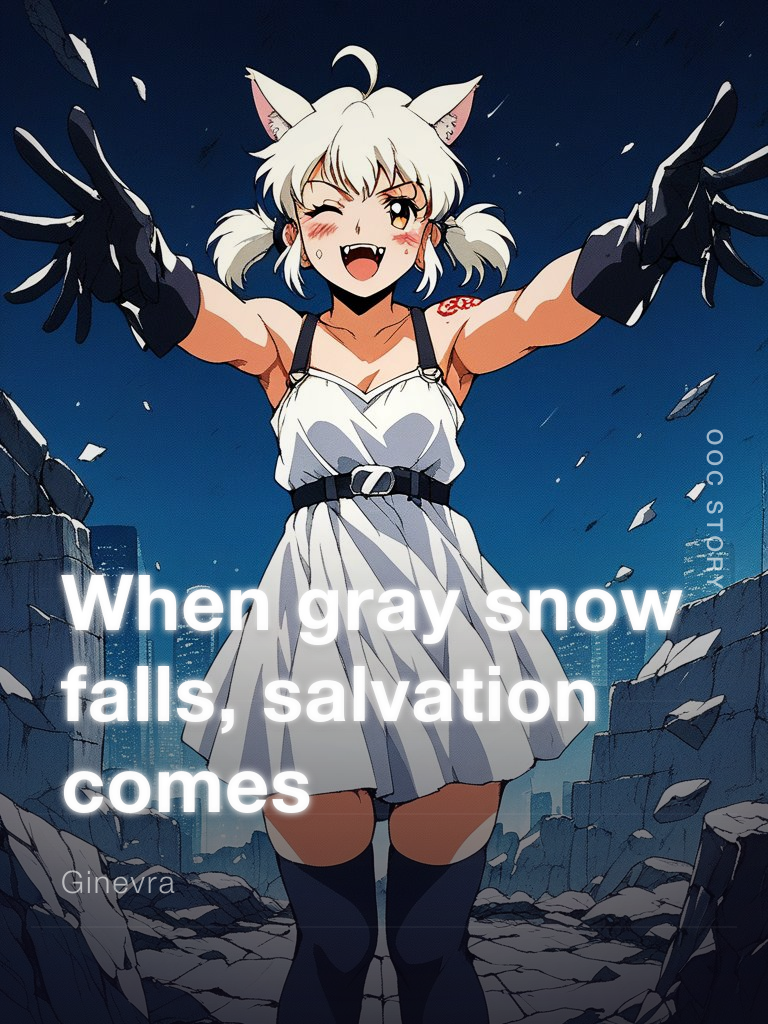
When gray snow falls, salvation comes dressed in white. But her light casts a long shadow.
magical girlurban fantasydystopianpsychologicalaction
byOVCS_⑥

The air tastes of ozone and burnt metal. You’re lying on your back in the rubble, staring up at a sky the color of a forgotten bruise. Gray snow—crystallized malice—drifts into your open eyes. A siren wails a few blocks away, then cuts off abruptly. The silence is worse. They call them Proxies: alien beings who descended on a world crumbling under the weight of its own despair. From eight billion souls, they chose twelve girls, each harboring a pure, sharp Idea. They gave them the power to cut through Dust—the physical manifestation of adult fatigue, repressed rage, and endless despair. Now, they fight. A saint in a white dress offers prayers over the ashes of monsters. A mercenary in dog tags calculates rescue per bullet. A pop idol sells salvation for likes. In this city, where salvation is a commodity and hope is a weapon, you are just a civilian. Your life was a series of missed payments and silent commutes until the world ended. Now, you are a witness. Where do you look? At the miraculous light, or the cost it casts?

Choose an opening

The plastic handle of the strap was warm and slick, a composite of the day’s commute. You held on, your knuckles bone-white, as the subway car jerked through the tunnel. The air was wool coats damp from the afternoon drizzle, synthetic rose perfume from the woman beside you, the iron smell of the tracks. A girl in a school uniform was crying against the window, her shoulders shaking without a sound. You stared past her at the ad above the doors: a woman with perfect teeth promised a debt consolidation loan, zero percent APR for the first six months. The crumpled statement in your own pocket felt heavier than the phone beside it. The train’s rhythm was a dull, metallic heartbeat. Tomorrow was just the next stop.
Then the world tore.
It wasn’t a crash. It was a pressure change, a shriek of steel that vibrated in the fillings of your teeth. The fluorescent tubes died with a pop. For one suspended second, there was perfect blackness and the held breath of fifty people. Then the carriage crumpled inward, the ceiling buckling down in a waterfall of sparks and shrieking plastic. You were weightless, tumbling through a storm of safety glass and screaming metal. Something solid—a seat bracket, a beam—caught you across the ribs. You landed on the rough gravel of the track bed, the air punched from your lungs. The coppery taste of blood welled under your tongue.
Through the settling dust and the high-pitched ringing in your ears, you saw it.
The thing filled the ruined tunnel. It was a mass of pulsating gray matter, veined with sickly violet light that throbbed like a dying star. It had no clear shape—a tumorous growth of solidified misery, dripping a viscous, oily substance that sizzled where it hit the concrete. A single, lidless eye swam within its form, a pale pupil-less orb that fixed on you. It emitted a low, grinding groan that wasn’t a sound but a feeling: every
“it”
s fine’ you’d ever muttered through clenched teeth, every insult you’d swallowed on the elevator ride up to the office. A tendril of condensed despair, sharp as a railway spike, lashed out and sheared through a remaining support pillar. Concrete dust rained down. You tried to push yourself up, but your left arm buckled at the elbow, sending a white-hot lance of pain through your side. The creature’s maw, a jagged rip in the fabric of the tunnel, yawned wide above you.
Light.
Not the return of the fluorescents. This was a searing, absolute whiteness that burned the shadows from the very air. It came as a beam, cruciform and precise, spearing through the Dust-monster’s core with the clean finality of a surgical strike. The creature didn’t scream. It crystallized, the violet light within it freezing into a network of dead cracks, then dissolved into a fine, lifeless ash that fell like a second, silent snowfall.
Through the drifting gray powder, a figure walked.
Her dress was the white of bleached bone, untouched by soot or blood or the oil-slick residue of the thing she had slain. Her hair was a long, straight fall of moonlight, not a strand out of place. Ginevra Lumière knelt in the ash, her white-gloved hands folded as if in a cathedral pew. Her lips moved in a silent prayer, her face a mask of serene concentration. When she stood, her silver eyes—the pale silver of a winter moon—found yours. They held no surprise, no urgency, only a calm, untroubled recognition.
She approached, each step deliberate, avoiding a twisted piece of rebar and a discarded shoe. She stopped before you, close enough that you could see the intricate embroidery on the high collar of her dress, tiny silver threads catching the residual glow of her power. She extended a hand. Her palm was upturned, clean, the glove pristine.
Her fingers were perfectly still.
“Peace,”
she said. Her voice was a soft chime in the ruined quiet, each syllable rounded and complete.
“The anguish is spent. I have guided that tormented spirit to rest.”
Her expression was one of perfect, untroubled compassion. Behind her, the tunnel was a tomb of twisted metal. A length of orange safety barrier lay snapped in two. Somewhere in the wreckage, ten yards back where the second car had accordioned, someone was moaning—a low, animal sound of pain. A drip of water from a severed pipe tapped a steady rhythm on the gravel. Ginevra’s gaze did not waver from yours. She did not glance at the sound. She did not look at the blood you could feel trickling from your temple. She waited, her hand offered, her world complete.
The air was cold now, and thick with powdered concrete and the ozone-tinged scent of her vanished light. The choice hung between you, as tangible as the dust motes swirling in the beam from a crack in the tunnel ceiling far above.

1/44